
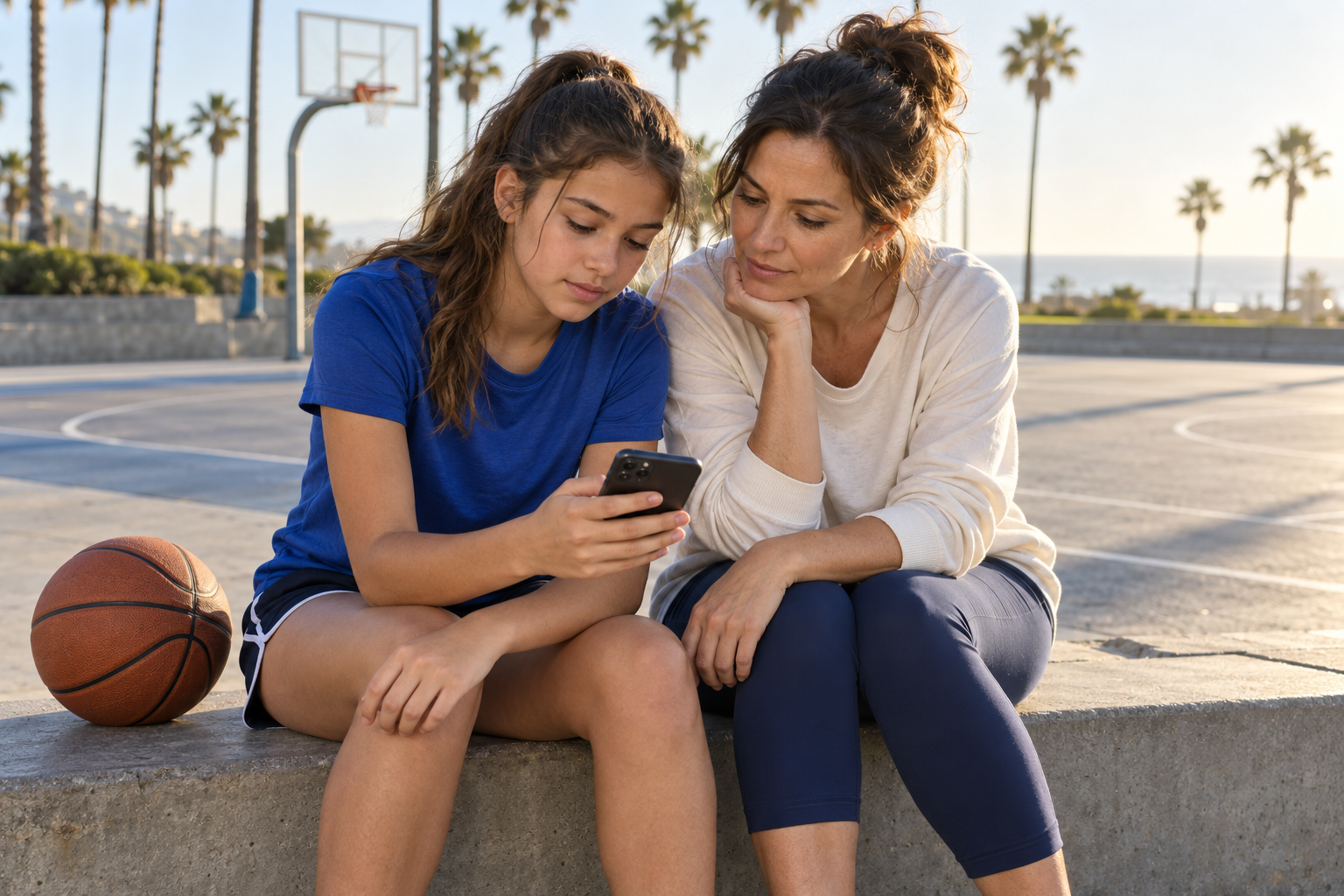
A parent approves a basketball video for a child. It passes the family's basic checks: appropriate subject, acceptable language and a manageable length. Yet two videos that meet those conditions might offer very different experiences. One explains a simple idea clearly. Another spends most of its time teasing a reveal or selling equipment.
This is a hypothetical comparison, but it identifies a decision that access settings cannot make for a family. Permission tells a child what is available. It does not fully explain what deserves attention.
As families settle into the school year, GameFit proposes adding a small act of selection to the familiar conversation about limits. Choose something together, ask what makes it worthwhile and consider whether it leaves the child with an idea, an enjoyable experience or something they want to explore.
Keep the boundary, add a conversation
Parental controls have a useful role. The American Academy of Pediatrics describes tools for managing areas such as content filtering, time and spending, alongside family discussion and shared media use. Its guidance does not present settings as a complete substitute for an involved adult. (Source 1)
A family can keep an agreed restriction while discussing the choices available within it. The purpose is not to persuade a child that everything they enjoy is secretly bad. It is to make the reasons for choosing something understandable.
Start with a real example rather than a general lecture about the internet. “Show me a video you liked” gives both people something specific to discuss. A parent can ask what made it interesting, whether anything was confusing and why the child would recommend it.
The adult can share an example too. A useful explanation, a funny scene or an absorbing story all offer ways into the conversation.
Make room for different kinds of value
Worthwhile content does not have to resemble schoolwork. GameFit's editorial position is that humor, imagination, enjoyment and shared interests deserve a place alongside learning. Turning every viewing session into a test would miss much of what makes entertainment appealing.
The AAP's media guidance, updated January 6, 2026, offers a broader lens through its five Cs: the child, content, calming, crowding out and communication. It asks families to consider the particular child and the surrounding experience, rather than relying on one screen-time number. (Source 2)
Our practical interpretation is to ask what the child wants from this moment. Are they relaxing, learning a move, following a story or finding something to discuss with a friend? A family can judge the selection against that purpose.
A comedy does not fail because it teaches no athletic skill. A promised tutorial deserves closer scrutiny if it never explains the skill.
Look past the educational label
An educational label can be a starting point for inspection, not a finished assessment.
A 2021 study by Marisa Meyer and colleagues analyzed 124 children's apps using a framework covering active learning, engagement in learning, meaningful learning and social interaction. Most scored in the lower range of that framework. The work examined apps marketed to young children, including apps used by preschoolers; it was a content analysis, not a trial measuring children's learning. (Source 3)
It also describes an older sample, not today's entire app market or teenagers' media. Its useful caution is narrower: a label alone is insufficient evidence of educational quality.
For a parent, that suggests looking inside the experience. Does an explanation help the child understand an idea? Does an activity allow a meaningful choice? Are the apparent learning elements central to what happens, or mostly decoration around rewards and interruptions?
These questions are GameFit's suggested prompts, not a validated scoring system.
Compare two examples together
Consider a child interested in basketball. A parent and child could select two short, age-appropriate videos on a similar subject and watch them together.
Ask the child which one they would choose again and why. Then compare a few details:
- Clarity: Can they explain what the video was trying to show?
- Commercial pressure: Does understanding the idea seem to require buying something or following another promotion?
- Participation: Is there an accessible way to explore the idea, if they want to?
- Choice: Can they finish feeling satisfied, or does the experience keep withholding what it promised?
The point is to practice describing an experience. Different answers can open a useful disagreement. A child may prefer the funnier presenter, while a parent values the clearer explanation. Both observations can matter.
A creator earning money does not automatically make the content worthless. Families can discuss whether a promotion is clear and whether the content delivers value on its own.
Let the child contribute without making them responsible for everything
A parent cannot review every piece of media in advance. Nor should a conversation imply that a child is responsible for avoiding every confusing or inappropriate experience.
For young teens, the AAP recommends involving them in content selection and maintaining open discussion about their digital lives. Its guidance also recognizes that fear of losing a device can discourage them from sharing difficulties. (Source 4)
A manageable approach is to agree on a small starting selection and revisit it occasionally. Ask the child to bring a new choice and explain what interests them. Parents retain responsibility for boundaries, while the child gets practice expressing preferences and concerns.
If something troubling appears, the immediate priority is understanding what happened and helping. Reviewing the arrangement can follow. A request for help should not be treated as proof that the child cannot be trusted.
Give an interest somewhere to go
The next step does not have to be more content. After a basketball explanation, a child might want to ask a coach about it, draw a play or try a simple activity in a suitable space with appropriate adult involvement. They may also want to stop.
Those possibilities connect to GameFit's purpose: developing stories and games that could support movement, relationships and offline adventures. They remain design intentions, not demonstrated GameFit outcomes.
Parents should not have to invent every continuation. Creators can explain who an experience is for, what it offers, what equipment or space an optional activity needs and where it ends. A useful invitation should allow adaptation for different abilities and circumstances.
There is no need to require a purchase, a public post or proof that a child completed an activity. Enjoying a story can be enough.
Make content quality a shared responsibility
The larger question belongs to more than parents. What information would help families choose? How should a producer explain an educational claim? What makes a sports demonstration useful to a beginner? How can young people contribute to those judgments?
These are questions for educators, researchers, coaches and entertainment designers to examine together. GameFit's forming Council is intended to support that exchange; it is not an established certification body or a panel already endorsing products.
For the next family conversation, begin with one piece of content. Ask what made it worth choosing and whether anything about the experience should change. That is a practical way to discuss attention without reducing the whole question to permission or minutes.