
Picture a child who loves basketball highlights but hesitates when someone offers a ball. On a screen, the game is familiar: the crossover, the celebration, the impossible finish. On a court, the questions are different. Where should I stand? What if I miss? Will anybody pass to me?
Recognizing a sport and feeling ready to participate are different experiences. A child can know the players, understand the story, and enjoy the culture while still needing a patient introduction to the activity itself.
As families consider school-year activities, that distinction deserves attention. The question is not simply which sport a child should join. It is whether the available experience makes room for someone who is still learning how to play.
An invitation should include a beginning
Adults sometimes describe a child as uninterested in sport after an unsuccessful introduction. But that introduction may have combined several difficulties: unfamiliar rules, more experienced peers, too little time with the ball, or instruction that assumed knowledge the child did not have.
Those are different problems, and they call for different responses. A smaller group might help one child. A clearer demonstration might help another. Someone else may prefer a different sport altogether. None of these possibilities requires deciding that the child lacks an athletic identity.
GameFit’s position is that beginner status should be an ordinary, respected part of participation. Children should have somewhere to start, somewhere to restart, and somewhere to continue recreationally without having to pursue a competitive pathway.
Enjoyment deserves serious attention
Research supports taking children’s experience of sport seriously. In a prospective study published in 2017, researchers surveyed 327 regular sport participants with an average age of about 13 and examined participation one year later. Greater enjoyment and stronger intentions to continue were associated with a lower likelihood of dropping out. Peer acceptance also remained significant in the final model. These findings identify useful signals, rather than proving that a particular coaching approach prevents withdrawal. (Source 1)
A 2022 systematic review and meta-analysis similarly found a strong association between enjoyment and intentions to continue participating. Importantly, the review distinguished intentions from subsequent behavior. Enjoying a session and saying you want to return are meaningful, but they do not guarantee sustained participation. (Source 2)
For parents and program leaders, this suggests looking beyond whether a child completed the session. What did the child actually experience? Did they understand the activity? Get involved? Have an opportunity to improve? Feel welcome enough to try again?
Make the first experience playable
A beginner session should offer a recognizable version of the sport early enough for the child to experience its appeal. Instruction matters, but explanations need somewhere to land.
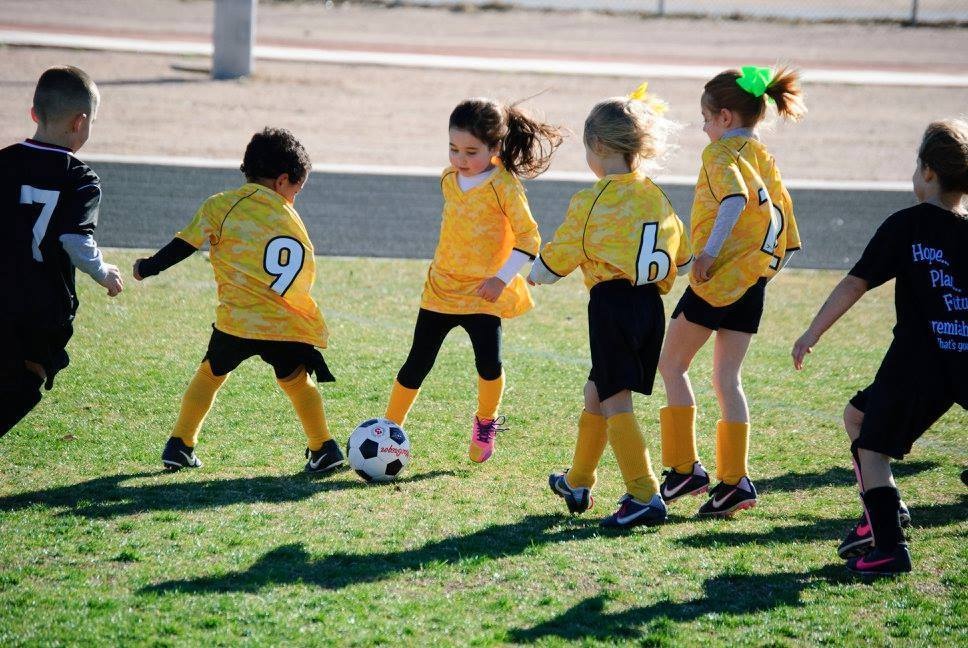
In tennis, that might mean a short cooperative exchange with equipment and space suited to the participants. In basketball, it could mean passing and shooting from manageable distances before adding defensive pressure. In soccer, a small game can offer a clearer starting point than a crowded match in which a newcomer rarely touches the ball.
These are practical design proposals, not a single tested formula. Their purpose is to give adults a better question: what needs adjusting so this child can participate meaningfully today?
Difficulty can increase as understanding develops. The first experience does not need to demonstrate everything the sport might eventually demand.
Let progress be visible without making it public
A child can notice improvement without a leaderboard. A pass reaches its partner. A rally lasts longer. A movement that felt confusing begins to make sense.
Adults can describe those changes precisely. “You found more space that time” gives a child something useful to recognize and repeat. It also directs attention toward an action the child can influence.
That does not require removing competition from childhood. Keeping score can be enjoyable, and some children actively seek competitive challenges. The design question is whether every introduction needs to become a public comparison before participants have learned the basics.
A recreational setting should offer several reasons to value a session: learning, effort, cooperation, discovery, and the pleasure of playing.
Sports content can show the way in
Entertainment has a role here because it can portray what participation looks like.
A highlight makes the finished skill visible. A different kind of story can reveal the learning process: a character asking for help, a teammate explaining a rule, an unsuccessful attempt followed by an adjustment. The creative challenge is to make that process interesting enough to watch.
For GameFit, this is an editorial and product hypothesis worth testing. Can a compelling sports story make an ordinary first attempt feel more approachable? Can it give a child a simple idea to explore with a parent, sibling, or friend?
The handoff should be modest and achievable. A story about teamwork could lead into a cooperative passing game. A scene about finding space could inspire a simple game of movement and positioning. The activity should be adaptable to the child, the setting, and available adult support.
Children should not have to reproduce an exceptional performance to participate in the story.
Give returning children room to restart
The same principle applies to children returning after an interruption. That interruption might involve a move, illness, a difficult previous experience, changing family circumstances, or disrupted opportunities during the pandemic.
The reason matters, but it should not become a label. A program should respond to the child’s present experience rather than assume that age alone establishes readiness.
A returning participant may remember the rules but want time to regain confidence. Another may be discovering a sport for the first time alongside peers who have played for years. Both need a legitimate place in the session.
Recreational pathways should remain available beyond the youngest age groups. Beginning later should not mean that the only options are an uncomfortable mismatch or no participation.
Parents need useful questions
Before committing to a program, parents can ask how newcomers are introduced, how activities are adapted, and what happens when a child struggles. They can also ask whether equipment is available to borrow and whether a trial session is possible.
Afterward, a conversation can begin with specific experiences: what felt interesting, what was confusing, and what the child would like to try again. One difficult session need not determine the entire decision, but repeated discomfort should not be dismissed simply because an adult considers the program valuable.
Access also involves practical conditions. Cost, transport, timing, and appropriate facilities cannot be solved by encouraging a child to feel more confident.
A place to keep playing
GameFit should help make the distance between enjoying sports culture and joining an activity easier to cross. That requires entertaining content, thoughtful introductions, and real opportunities to participate.
The proposition remains to be tested. GameFit has not demonstrated that its content increases sports participation or improves mental health. A useful early test would examine whether children understand an invitation, feel able to attempt it, and choose to participate again.
The ambition is straightforward: a child should be able to enjoy sport while learning it, with room to become more capable over time.